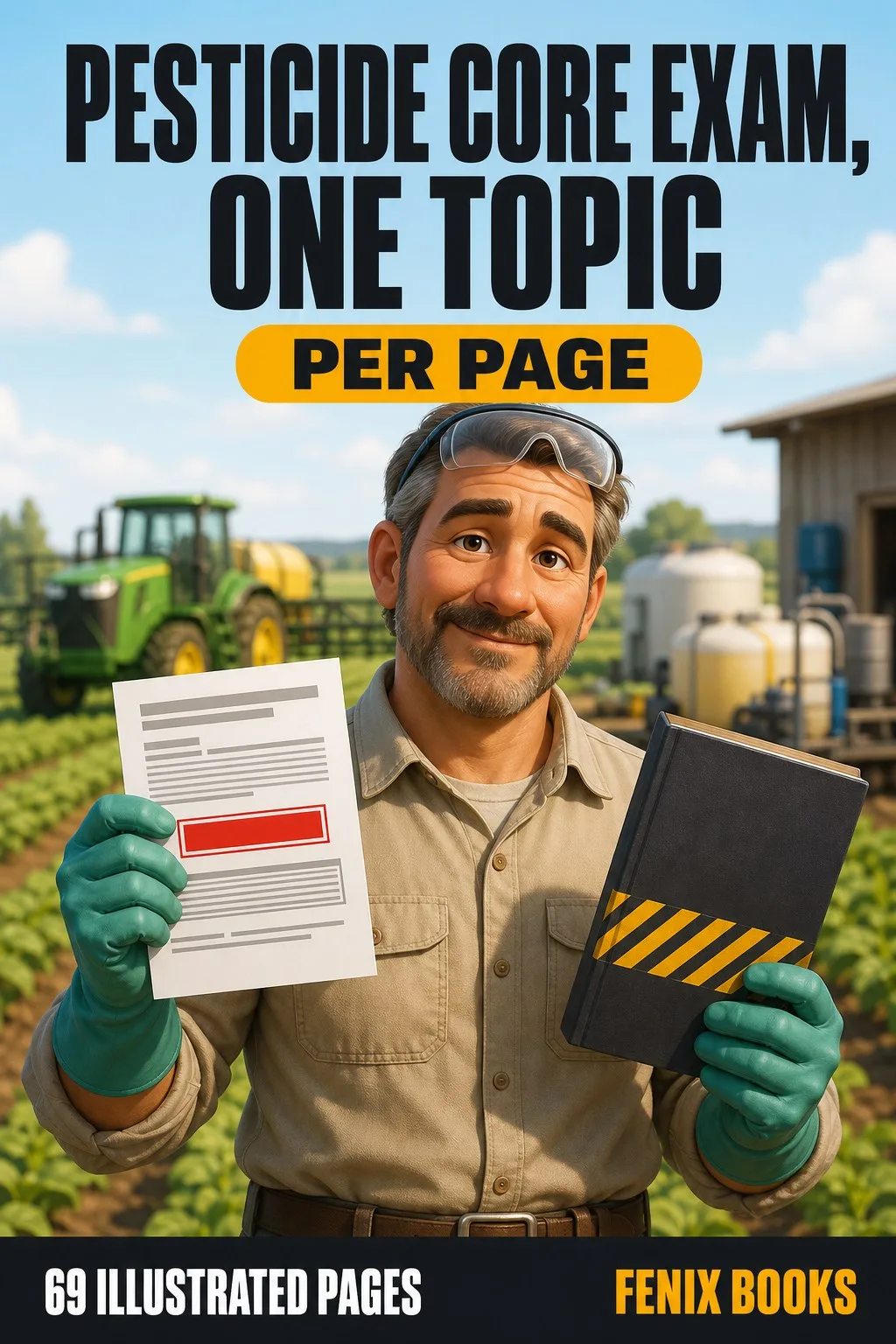
Introductory price — today only

📄 Digital book in PDF: it comes by email. Nothing is shipped on paper.

The page-by-page guide to walk into the pesticide core exam knowing where each topic lives

How to sort labels, calibration math, signal words and PPE without rereading a thick manual — for you or your crew

Get the guide ➤

🔒 Protected checkout · PDF by email · 30-day guarantee

69drawn topic pages
9parts: law, label, safety, math and review
2free bonus books included
PDFby email — print it if you want

Take a look inside the book

Built to read on your phone screen while you’re on the truck, in the shop or waiting for your exam slot. Share it with your team.

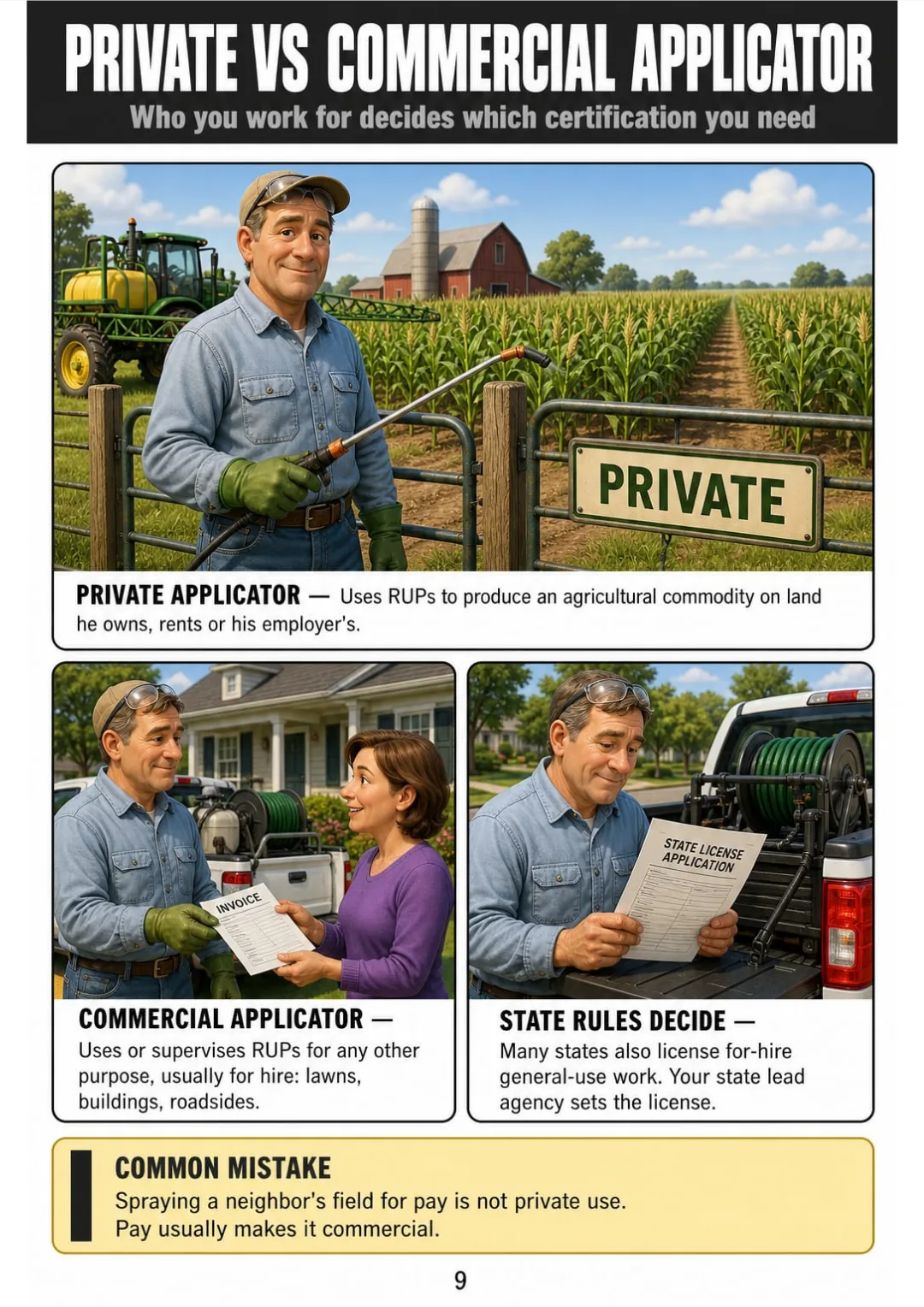
Private: your own or employer's farm. Commercial: for hire or any other setting.
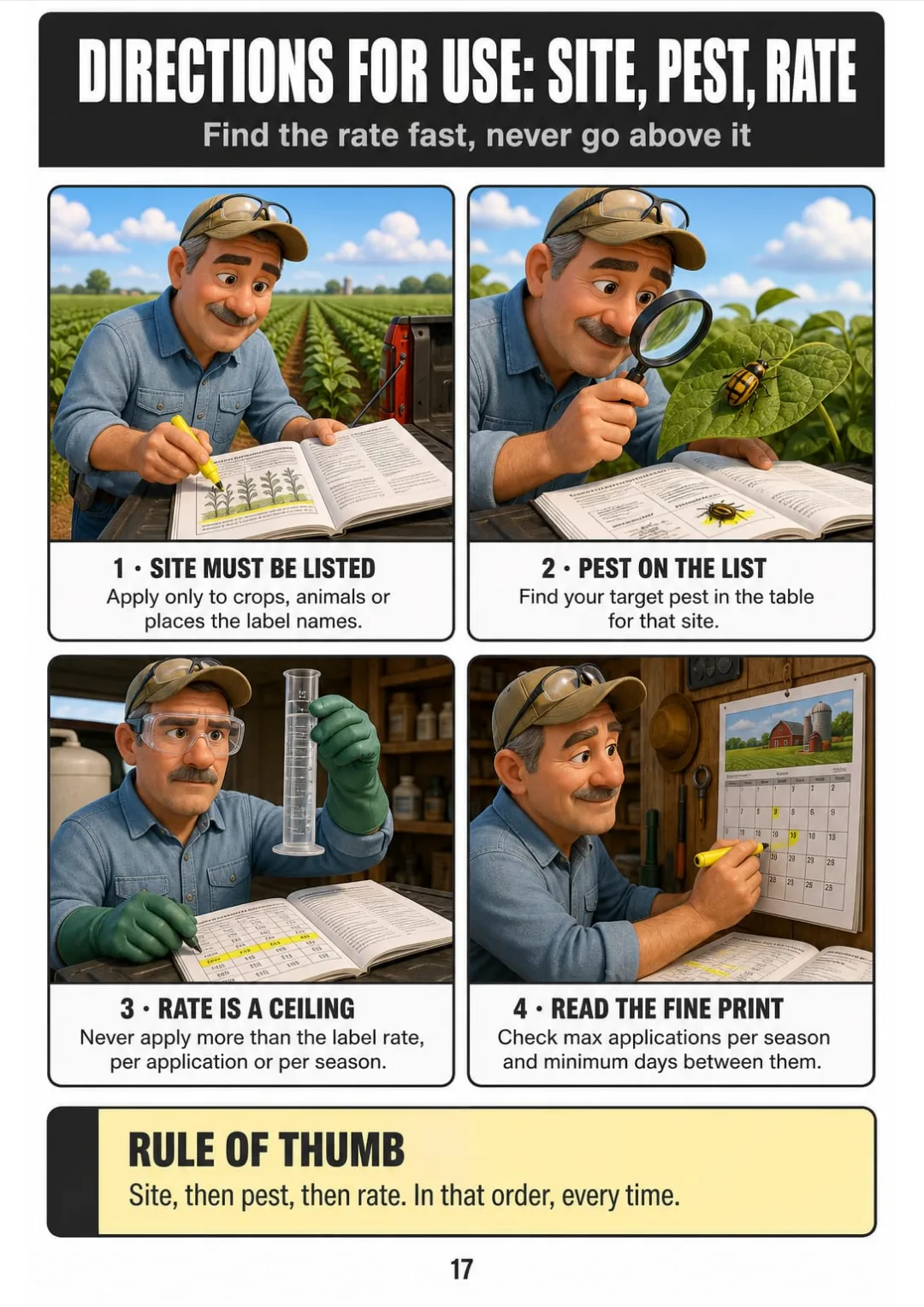
Directions for use: labeled site, labeled pest, never above the label rate.
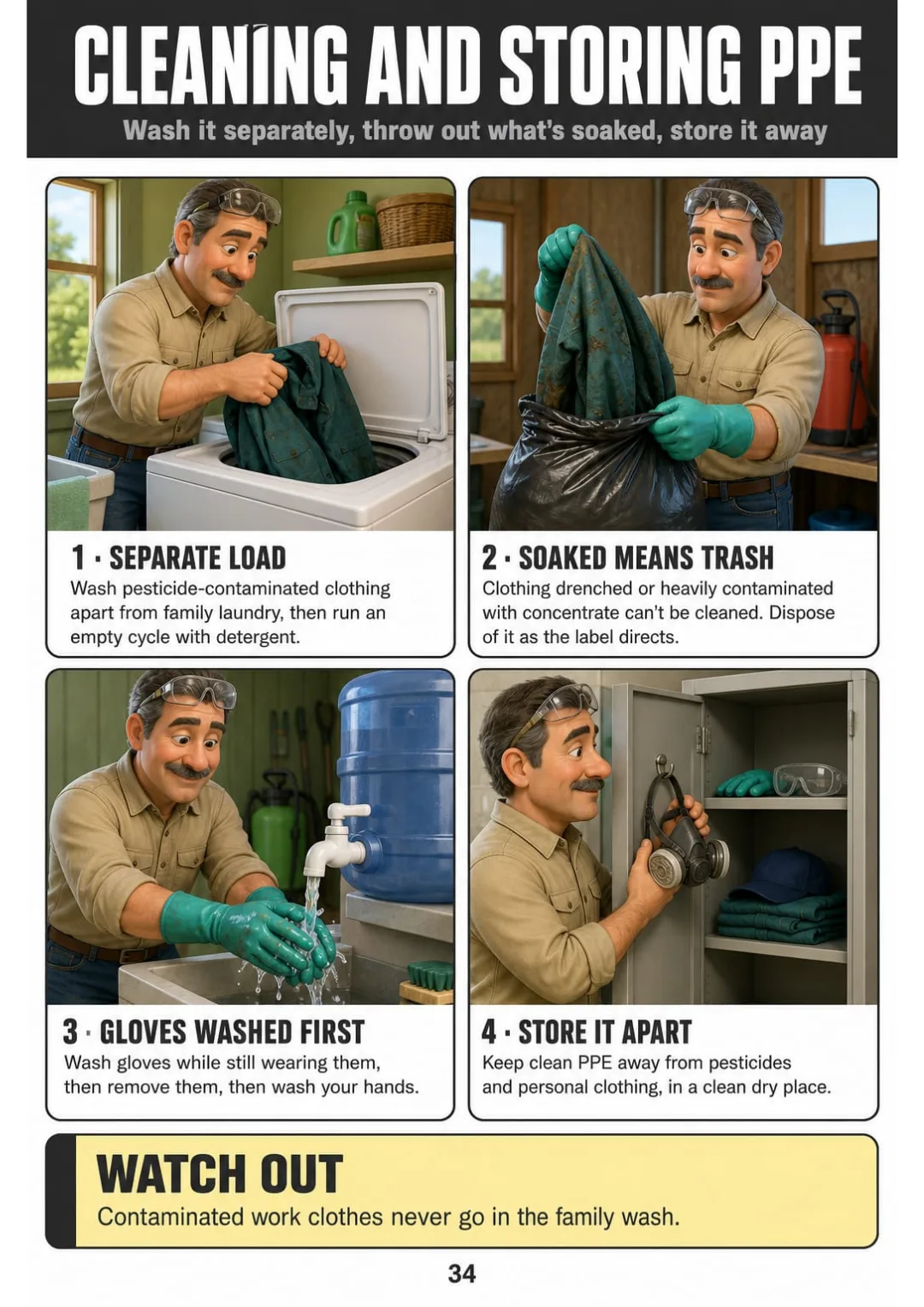
Wash separately, discard items soaked with concentrate, and store PPE away from pesticides.
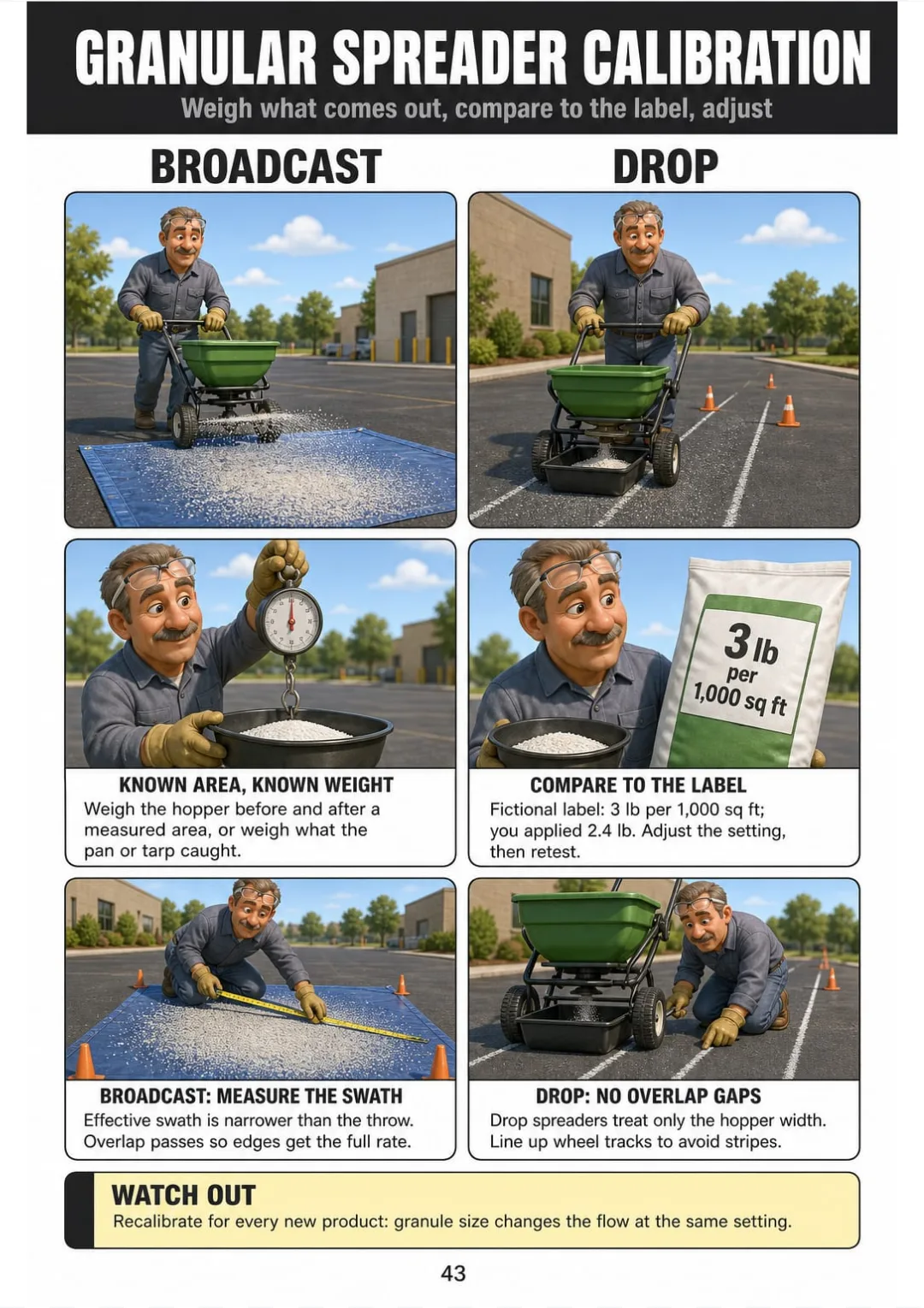
Broadcast vs drop: weigh product over a known area, match the label rate
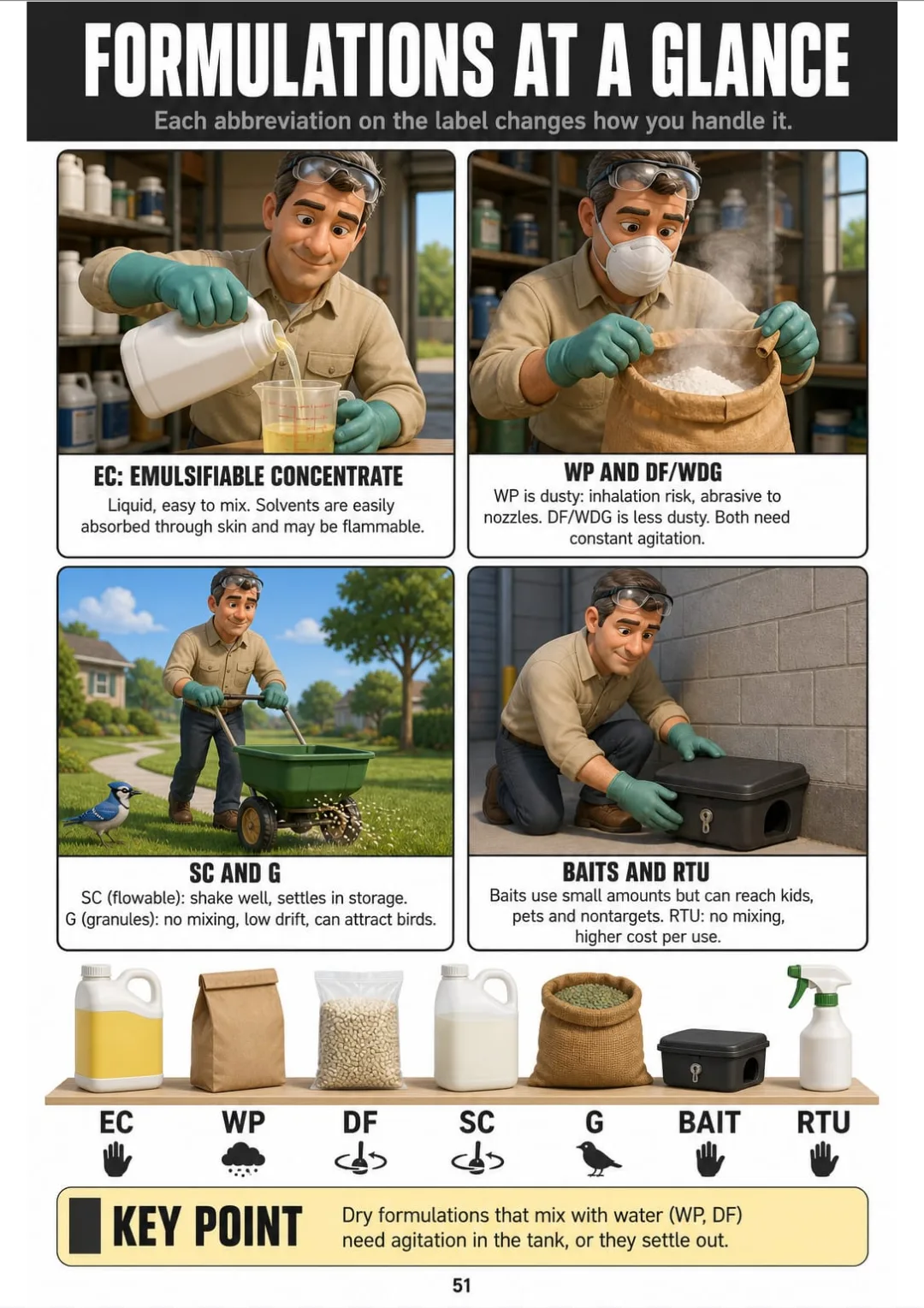
EC, WP, DF, SC, G, bait and RTU: what each code means for mixing and safety.
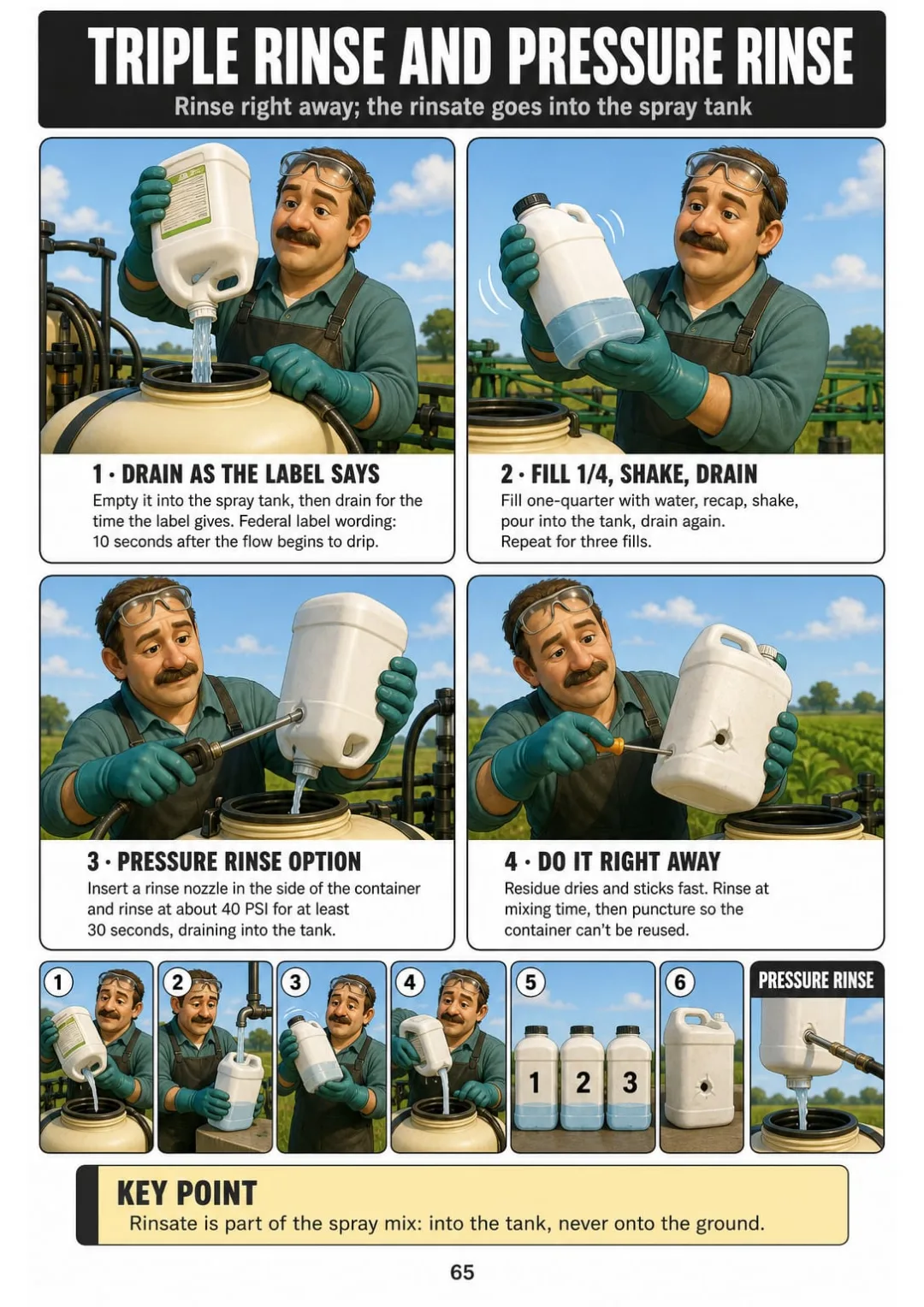
Triple rinse: fill one-quarter, shake, drain into tank, three times; pressure rinse at least 30 seconds.
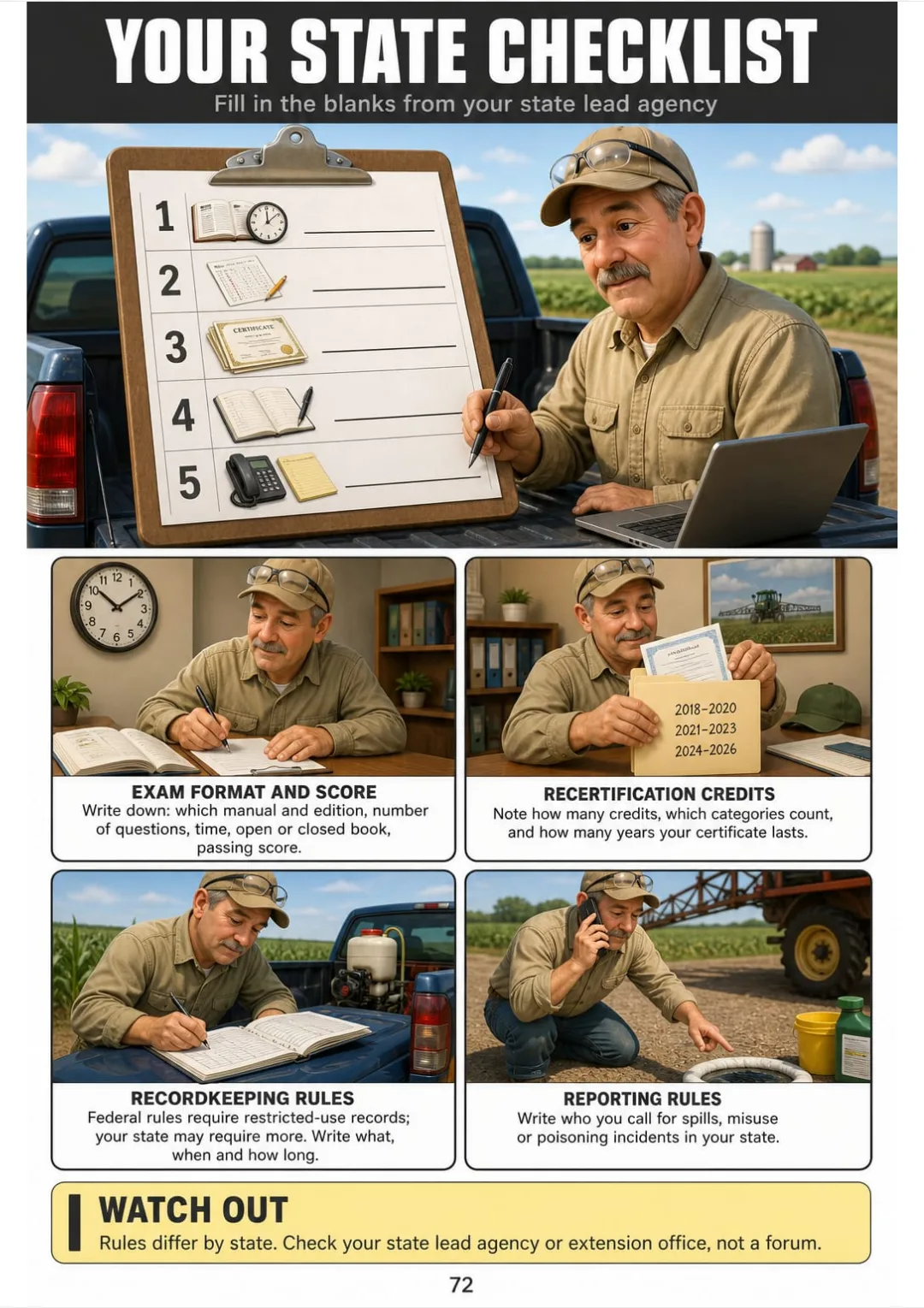
Exam format, passing score, credits, records and reporting: fill each in from your state agency.

Swipe to see more · tap to zoom →

It’s not the studying. It’s the sorting.

You’ve highlighted the core manual in three colors. Then a practice question asks about re-entry and signal words, REI, PHI, LD50 and FIFRA all sound like the same thing. You can’t tell what belongs on the label from what belongs in the law.

The calibration section is worse: three methods, mixed units, no clear steps. You stare at the formula and your mind goes blank.

And LD50? Lower number means more toxic. It sounds backwards until someone draws it as a traffic light: smaller number, redder light.

Directions for use: labeled site, labeled pest, never above the label rate.

This page puts directions for use in front of you: labeled site, labeled pest, never above the label rate. Three facts, one drawing, one page.

You stop guessing what the directions for use section covers. You see it.

Same facts as the manual. Now you can point at them.

COMPARE

The same topic, studied two ways

INSTEAD OF THIS
  • Read a dense paragraph on spreader calibration three times, close the book and lose the steps.
  • Try to memorize the formula without knowing which number goes where.
  • Mix up broadcast and drop spreaders because the manual explains both in the same block of text.
Typical manual-style paragraph, written for this page: Calibration of granular application equipment requires the applicator to determine the effective swath width and to measure the amount of product delivered over a known area in order to calculate the application rate in pounds per 1,000 square feet or per acre. For broadcast spreaders, the operator must make multiple passes across a measured test strip, collect the granules on a tarp or in catch pans positioned at regular intervals perpendicular to the direction of travel, weigh the collected material, and divide by the area covered. The label rate expressed in pounds of product per unit area must then be compared to the measured output, and the spreader setting adjusted accordingly.
CHOOSE THIS
  • Open one page: broadcast versus drop, with the label rate matched step by step.
  • Work tank-mix problems in the same five steps: label rate, area, sprayer output, area per tank, product per tank.
  • See the two spreader types side by side in one drawing and never confuse them again.
Broadcast vs drop: weigh product over a known area, match the label rate
CONTENTS

Take a look: 9 parts, 69 topics

From FIFRA and label law to calibration math, PPE, drift and exam-week review — nine parts, each topic on its own drawn page.

IHow the Exam and the Rules Work · pp. 6-11
  1. What the Core Exam Covers
  2. Core Exam vs Category Exams
  3. FIFRA in One Page
  4. Private vs Commercial Applicator
  5. General-Use vs Restricted-Use Pesticides
  6. Recordkeeping: What You Write Down
IIThe Label Is the Law · pp. 12-21
  1. Label vs Labeling
  2. A Fictional Label, Panel by Panel
  3. The Front Panel: Name, Ingredients, Signal Word
  4. EPA Registration and Establishment Numbers
  5. Precautionary Statements
  6. Directions for Use: Site, Pest, Rate
  7. REI vs PHI
  8. Storage and Disposal on the Label
  9. What the Label Allows You to Change
  10. Off-Label Use: Spot the Violation
IIIToxicity, Exposure and First Aid · pp. 22-29
  1. Toxicity vs Exposure: Hazard Is Both
  2. LD50 and LC50 the Right Way Around
  3. Signal Words as a Traffic Light
  4. Acute vs Chronic Effects
  5. Routes of Exposure
  6. Signs of Poisoning
  7. First Aid Starts on the Label
  8. Heat Stress Under PPE
IVPPE and Worker Safety · pp. 30-37
  1. Reading the PPE Box on the Label
  2. Chemical-Resistant Gloves and Footwear
  3. Coveralls, Aprons and Eye Protection
  4. Respirators: Type, Fit and Approval
  5. Cleaning and Storing PPE
  6. Worker Protection Standard Basics
  7. Entry Restrictions and Posting
  8. Decontamination Supplies
VCalibration and Tank-Mix Math · pp. 38-47
  1. US Units You Need
  2. The 5 Steps, Every Time
  3. Measuring Area: Rectangles, Circles, Triangles
  4. Boom Calibration: The 1/128 Acre Method
  5. Backpack and Hand-Can Calibration
  6. Granular Spreader Calibration
  7. How Much Product Goes in the Tank
  8. Percent Active Ingredient Math
  9. Mixing Order and Compatibility
  10. Five Math Traps to Avoid
VIPests, IPM, Formulations and Resistance · pp. 48-54
  1. Identify the Pest First
  2. IPM in 5 Moves
  3. Pesticide Types by Target
  4. Formulations at a Glance
  5. Adjuvants: What They Do
  6. How Resistance Develops
  7. Rotating Modes of Action
VIIDrift, Water and the Environment · pp. 55-60
  1. Spray Drift vs Vapor Drift
  2. Wind, Temperature and Inversions
  3. Droplet Size and Nozzle Choice
  4. Groundwater, Runoff and Leaching
  5. Pollinators, Wildlife and Buffer Zones
  6. Endangered Species Protections
VIIIHandling: Storage, Transport, Spills, Disposal · pp. 61-69
  1. Safe Storage
  2. Transporting Pesticides in the Truck
  3. The 3 Cs of a Spill
  4. Mixing and Loading Site Safety
  5. Triple Rinse and Pressure Rinse
  6. Disposing of Excess and Containers
  7. Supervising Noncertified Applicators
  8. Professionalism: Security, Communication, Stewardship
  9. Equipment and Application Methods
IXExam-Week Review · pp. 70-74
  1. The Core Exam on One Page
  2. Common Mix-Ups, Fixed
  3. Your State Checklist
  4. The Label-Reading Routine for Every Question
  5. Exam Day Plan

One topic. One page. One drawing.

No dense chapters. No paragraphs to dig through. Each topic gets its own page with a drawing you can point at. Codes like EC, WP, SC, granules, baits and RTU line up on one shelf.

EC, WP, DF, SC, G, bait and RTU: what each code means for mixing and safety.

This page shows every common formulation code at a glance: what it looks like, how it mixes and what it means for safety.

EC, WP and SC now each have their own picture, side by side.

Every code has a picture next to it, so you find it by looking, not by reciting.

What's inside Pesticide Core Exam, One Topic per Page

Ipp. 6-11

How the Exam and the Rules Work

How the exam works: core versus category, FIFRA, private versus commercial, general-use versus restricted-use and what records you keep.

IIpp. 12-21

The Label Is the Law

The label is the law: a fictional label taken apart panel by panel — front panel, directions for use, REI, PHI, storage and disposal.

IIIpp. 22-29

Toxicity, Exposure and First Aid

Toxicity, exposure and first aid: LD50 the right way around, signal words as a traffic light, routes of exposure and what to do first.

IVpp. 30-37

PPE and Worker Safety

PPE and worker safety: reading the PPE box, gloves, respirators, the Worker Protection Standard and decontamination supplies.

Vpp. 38-47

Calibration and Tank-Mix Math

Calibration and tank-mix math: US units, the five-step method, boom, backpack and granular calibration, and five math traps to avoid.

VIpp. 48-54

Pests, IPM, Formulations and Resistance

Pests, IPM, formulations and resistance: identify the pest first, IPM in five moves, formulation codes and rotating modes of action.

VIIpp. 55-60

Drift, Water and the Environment

Drift, water and the environment: spray drift versus vapor drift, wind and inversions, droplet size, groundwater and buffer zones.

VIIIpp. 61-69

Handling: Storage, Transport, Spills, Disposal

Handling: safe storage, transport, the three Cs of a spill, triple rinse and container disposal.

IXpp. 70-74

Exam-Week Review

Exam-week review: the book’s key facts on one map, common mix-ups fixed and your state checklist to fill in.

Plus, 2 free books come with it

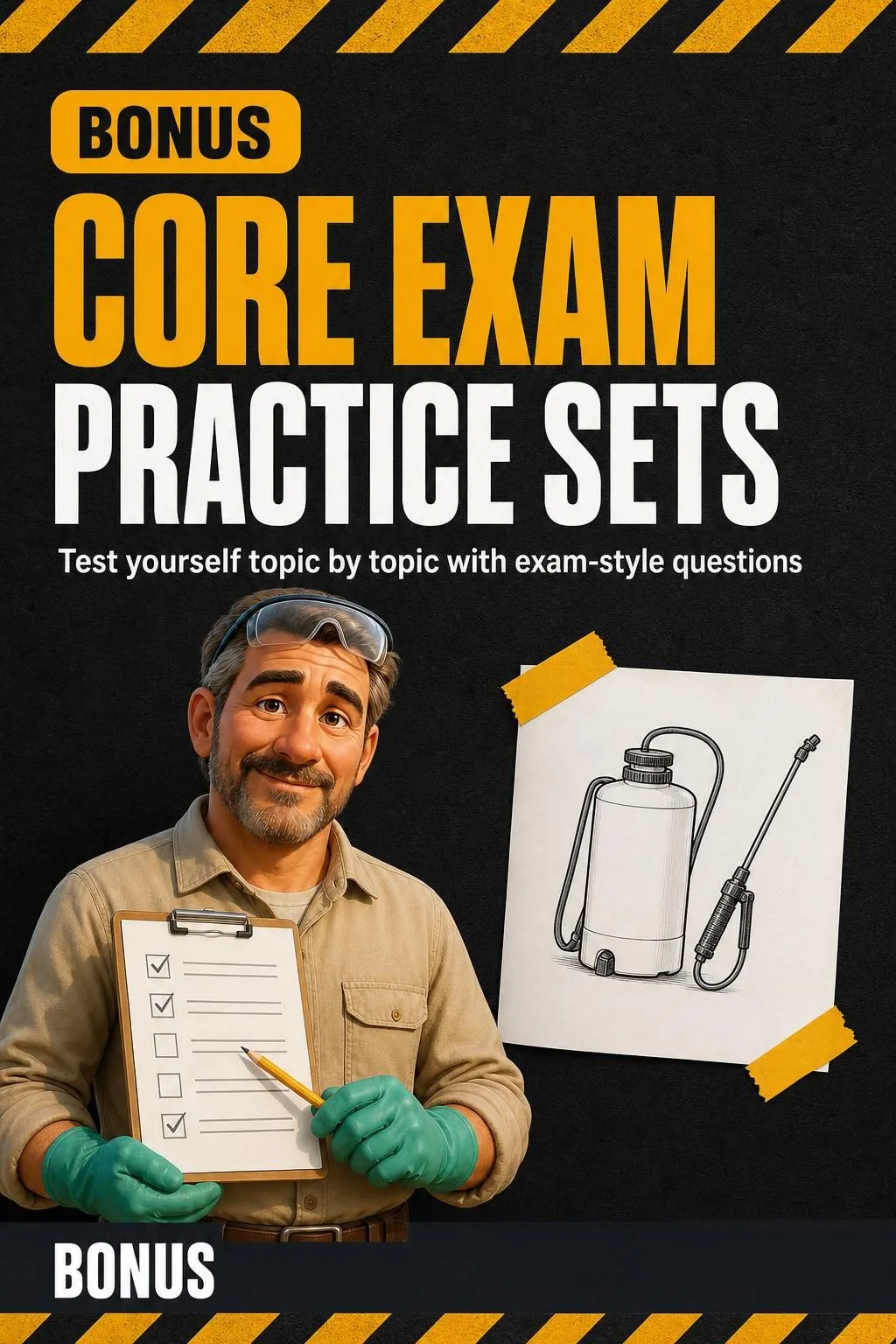
Core Exam Practice Sets

GIFT 1: «Core Exam Practice Sets»

Bought separately: US$ 17.90

Test yourself topic by topic with exam-style questions, and see in one line why each answer is right.

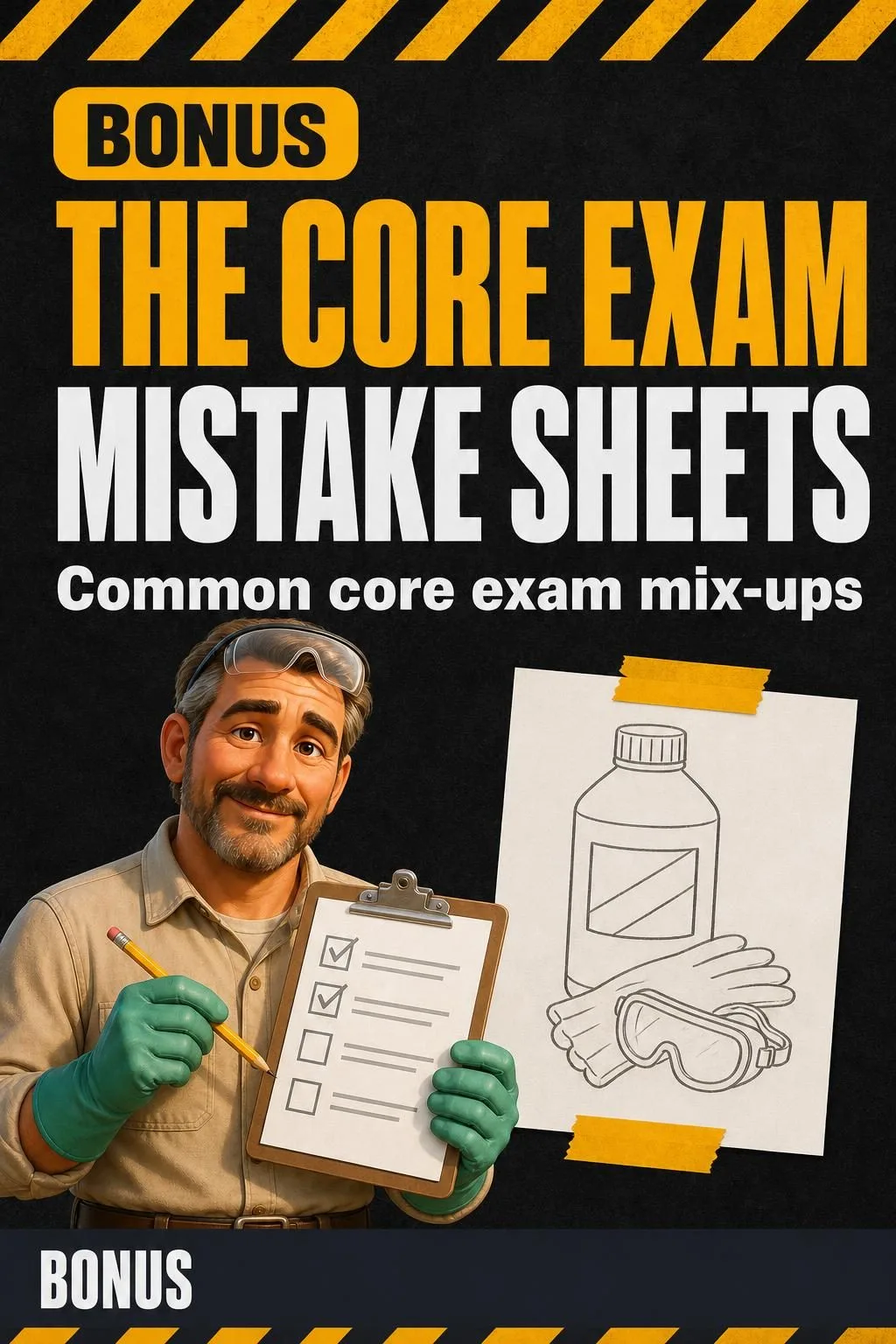
The Core Exam Mistake Sheets

GIFT 2: «The Core Exam Mistake Sheets»

Bought separately: US$ 14.90

Common core exam mix-ups, each one fixed on a single page you can review the night before.

Your bundle: Pesticide Core Exam, One Topic per Page and 2 gifts

  • Pesticide Core Exam, One Topic per Page: 69 illustrated pagesUS$ 63
  • GIFT 1: Core Exam Practice SetsUS$ 17.90
  • GIFT 2: The Core Exam Mistake SheetsUS$ 14.90
  • High-quality PDF file, ready to printIncluded
Total value US$ 95.80
BUNDLE PRICE
US$ 27
YOU SAVE: US$ 68.80
GET PESTICIDE CORE EXAM, ONE TOPIC PER PAGE · US$ 27

📄 Digital book in PDF: it comes by email. Nothing is shipped on paper.

Protected paymentEncrypted data30-day guarantee

PDF by email: You receive Pesticide Core Exam, One Topic per Page as a PDF in your inbox, along with the 2 free books. You pay once: no installments, no extra charges.

Is this guide for you?

Taking the core exam for the first time

Taking the core exam for the first time

You’ve been doing lawn care, pest control or ag work for years, and now you need the license. The state manual is a lot of small print. You want the topics sorted and drawn so you can study on the truck.

Retaking after a close miss

Retaking after a close miss

You failed by a few points and you know the material is in your head — just not in order. You need a fast review that puts each topic on its page, so you can spot what’s missing.

Owner or manager with a crew preparing for the exam

Owner or manager with a crew preparing for the exam

Your team has the core exam coming up. Check what your state requires. You want something they’ll actually open — not a manual they’ll leave in the glove box.

Everything your purchase includes

US$ 95.80US$ 27
GET PESTICIDE CORE EXAM, ONE TOPIC PER PAGE · US$ 27

📄 Digital book in PDF: it comes by email. Nothing is shipped on paper.

30DAYS
GUARANTEE

30 days to try it

100% Money-Back Guarantee for 30 days. Use it to study for your real exam. If it doesn’t help you sort the topics or solve the math, tell us what didn’t work and we’ll refund every cent.

Common questions

Is this a physical book or a digital file?

It’s a digital PDF. You receive it by email and can read it on any screen or print it out.

Can I read it on my phone?

Yes. Every page is designed to be clear on a phone screen, a tablet or a printout.

Will I understand this if I’m starting from zero?

Yes. Each topic gets its own page in plain language, with a drawing. The math section walks you through every step in US units. You don’t need prior study to follow along.

How do I receive the material?

You get a PDF by email after you pay. Check your inbox and your spam folder.

Does this cover my state’s exam?

The book covers topics from the federal core standards that state exams commonly draw on: labels, toxicity, calibration, PPE, drift, FIFRA and worker safety. There is no single national exam: some states use their own manual and test, and structural pest control is licensed separately in some states. Confirm your license and manual before you study. Facts are checked against EPA regulations (40 CFR Parts 156, 170 and 171) and university extension publications. It is not written for one state’s exam. Part IX has a checklist where you fill in your state’s exam format, passing score, recertification credits and rules. Always confirm the details with your state lead agency.

Is this an official study guide?

No. This is an independent study guide. It is not published, endorsed or approved by the EPA, any state agency or any cooperative extension. It does not give you a license, a certificate or continuing education credits. Facts are checked against EPA regulations and university extension publications, but this is not an official exam resource.

I already have the free core manual from my extension office. Why would I need this?

The extension manual has the information. This book has the drawings. Each topic gets one drawn page, calibration math follows the same five steps every time, and the label is annotated panel by panel. It’s a visual companion, not a replacement.

Is this a one-time payment?

Yes. You pay once and the PDF is yours. No subscription, no renewal fee.

I’m bad at math. Will I understand the calibration section?

Tank-mix problems use the same five steps, and each calibration method gets its own worked example in US units — gallons, acres, square feet. No algebra. If you can multiply and divide, you can follow along.

Does this replace my state training or field experience?

No. This is a study aid. It does not replace required classroom hours, field training or supervision. Check your state’s requirements before exam day.
Before you close this page

Your manual has the detail. This book helps you sort it.

You need each topic on its page, in order, with a drawing you can actually see.

Open it on your phone or share it with your crew. Walk into the exam knowing where each topic lives.

The book, the practice sets and the mistake sheets. Sixty-nine topics, each one drawn where you can find it again.

US$ 27, paid once · 30-day guarantee · PDF by email

GET PESTICIDE CORE EXAM, ONE TOPIC PER PAGE · US$ 27

📄 Digital book in PDF: it comes by email. Nothing is shipped on paper.